How UK Government Policies Are Shaping the Future of British Business
Government policy has always been the invisible hand guiding UK business — but today, it feels less invisible than ever. From post-Brexit trade rewiring and sweeping tax changes to net zero mandates and digital innovation strategies, the decisions being made in Westminster are landing directly on the desks of business owners across Britain.

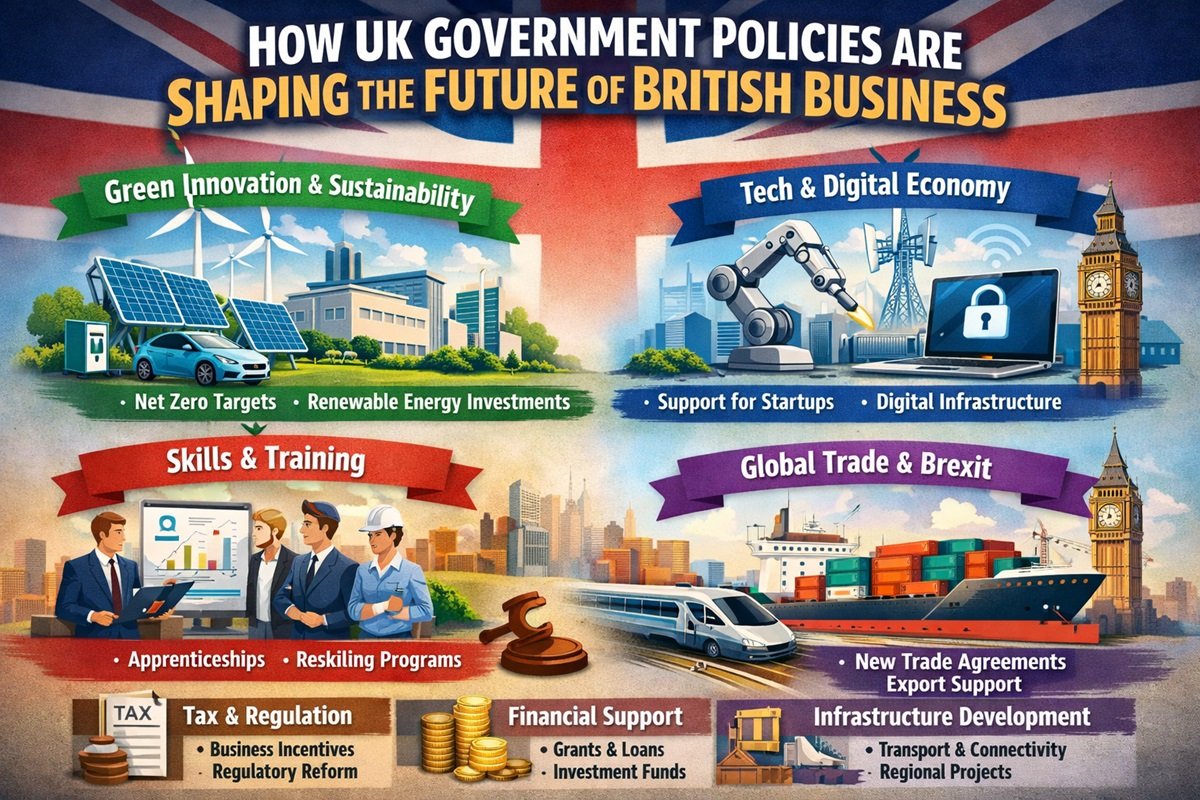
Government policy has always been the invisible hand guiding UK business — but today, it feels less invisible than ever. From post-Brexit trade rewiring and sweeping tax changes to net zero mandates and digital innovation incentives, the decisions being made in Westminster are landing directly on the balance sheets and strategic plans of businesses across Britain.
For founders, SME owners, and corporate leaders alike, understanding how UK government policies affect business is no longer optional background reading. It is a core part of running a company in the modern era. The organisations that grasp the policy landscape — and adapt to it intelligently — will be the ones best placed to grow.
This article breaks down the most consequential policy shifts currently reshaping UK business, what they mean in practice, and where the opportunities lie for those willing to engage rather than simply endure.
Why Government Policy Has Never Mattered More for UK Businesses
It is tempting to view government policy as something that happens at a distance — something for lobbyists and economists to worry about while business owners get on with the actual work of building companies. That view has always been a little naive. Right now, it is actively dangerous.
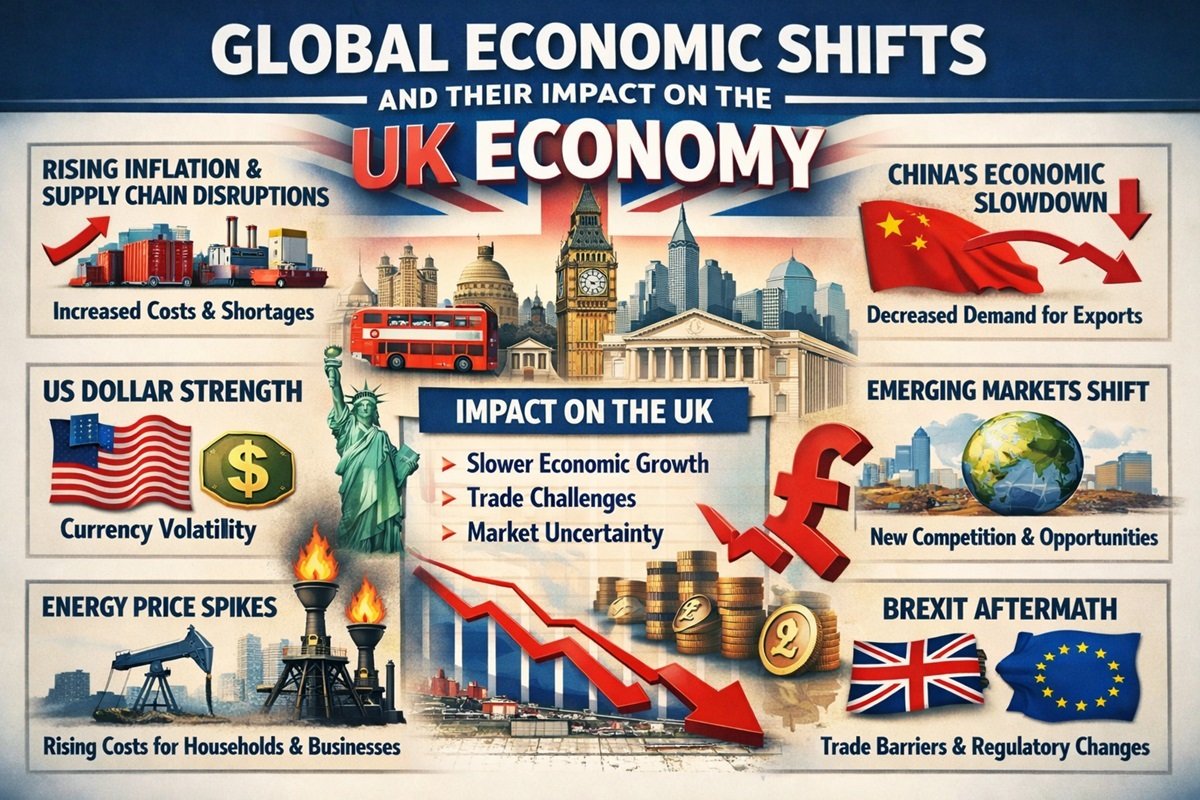
The UK has been through a period of extraordinary policy volatility. Brexit fundamentally restructured trade relationships. The pandemic triggered an unprecedented wave of fiscal intervention. Inflation forced the sharpest interest rate rises in a generation. And a change of government brought with it a significant reset in fiscal priorities, employment law, and industrial strategy.
Each of these shifts carries direct operational consequences. UK business regulation is evolving faster than at any point in recent memory, and the businesses that treat this as a compliance burden rather than a strategic signal are already behind.
The Current UK Policy Landscape: An Overview for Business Leaders
To make sense of where things are heading, it helps to understand the key policy pillars currently shaping the UK business environment. These are not isolated decisions — they form an interconnected framework that is actively restructuring how companies operate, compete, and grow.
Fiscal Policy and the Tax Environment
Taxation is the most immediate and tangible way that UK tax policies affect business. The recent increase in employer National Insurance contributions — announced in the Autumn Budget — has been one of the most discussed and debated policy decisions among UK employers in years. For labour-intensive businesses, particularly those in hospitality, retail, and social care, the increase represents a material uplift in fixed costs with no corresponding revenue benefit.
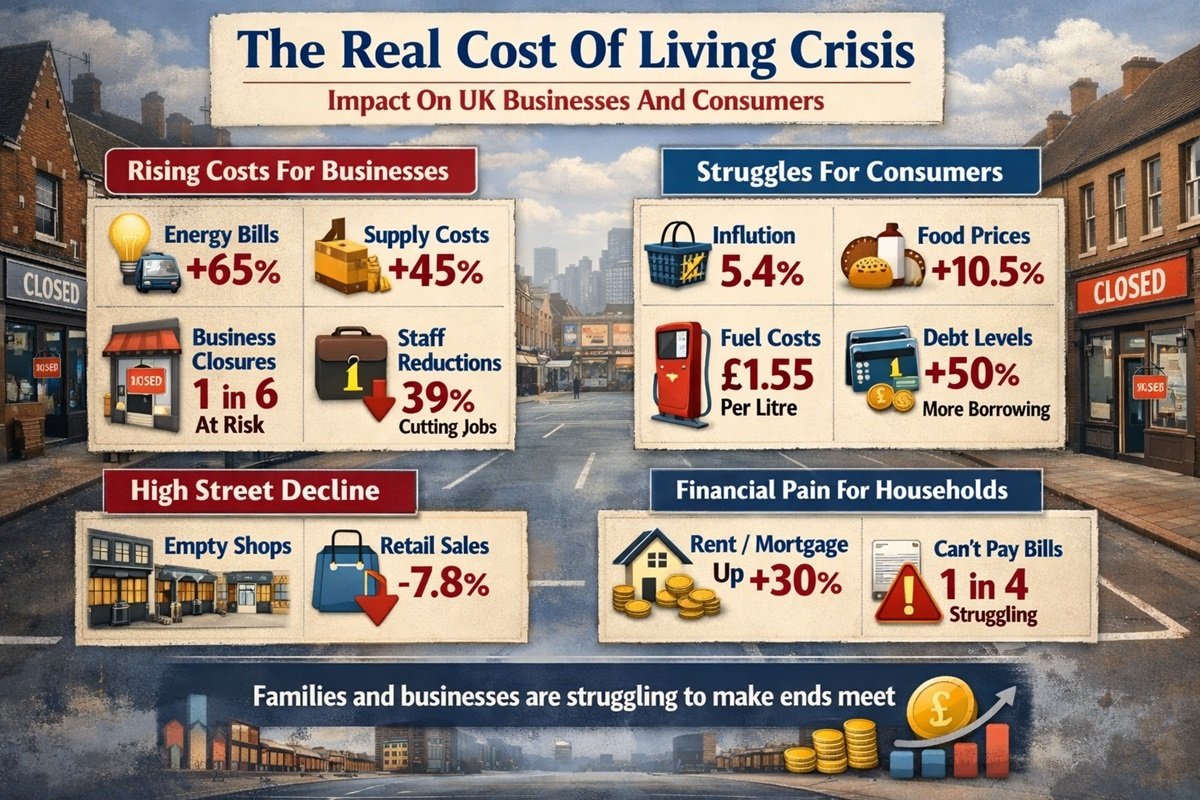
The rise in the National Living Wage, while socially important, compounds the pressure. Businesses that were already operating on thin margins are being forced to make difficult choices: raise prices, reduce headcount, invest in automation, or accept lower profitability.
On the other hand, the government has maintained the corporation tax rate at 25% for larger businesses while keeping the small profits rate at 19% — a deliberate design choice to protect smaller companies. For qualifying SMEs, the R&D tax credit framework, despite several rounds of reform, remains one of the most generous innovation incentives in the developed world.
The actionable reality: every UK business should be conducting a proactive tax efficiency review in the current environment — not just to manage costs, but to ensure they are accessing every legitimate incentive available to them.
Employment Law and Workplace Regulation
The proposed Employment Rights Bill represents one of the most significant overhauls of UK employment law in decades. Key changes on the horizon include:
- Day-one unfair dismissal rights — removing the current two-year qualifying period and fundamentally changing the risk calculus of hiring
- Strengthened flexible working rights — making it the default position rather than a request-based entitlement
- Enhanced rights for zero-hours contract workers — including the right to a guaranteed hours contract after a qualifying period
- Increased statutory sick pay entitlement — removing the current waiting period and potentially extending eligibility
For startups and SMEs in particular, these changes require thoughtful workforce planning. The cost and risk of hiring decisions is increasing, which may accelerate the shift towards contractor models, automation, and leaner team structures. For businesses that get ahead of these changes — reviewing contracts, updating policies, and training managers — the transition will be far smoother than for those that wait.
Post-Brexit Business: Three Years On, the Real Picture
Brexit remains one of the most consequential and contested policy decisions in modern British history. For post-Brexit business in the UK, the reality has settled into something more nuanced than either the optimists or the doomsayers predicted.
Trade Friction and Supply Chain Reconfiguration
The Trade and Cooperation Agreement negotiated with the EU eliminated tariffs on goods meeting rules of origin requirements — but the non-tariff barriers introduced by new customs, regulatory, and documentation requirements have been substantial. For businesses with complex cross-Channel supply chains, the administrative burden has been real, costly, and ongoing.
Many manufacturers and distributors have responded by fundamentally rethinking their logistics footprint — establishing EU-based subsidiaries, restructuring supplier relationships, or shifting to dual-origin manufacturing to maintain market access on both sides of the Channel.
Financial Services: Reclaiming Regulatory Autonomy
The UK’s departure from the EU single market in financial services created both disruption and opportunity. Some institutions relocated operations to Paris, Dublin, and Amsterdam. But the UK government has responded by developing its own regulatory framework — the Edinburgh Reforms and subsequent financial services legislation — designed to make the UK a more competitive hub for capital markets, fintech, and asset management.
For UK financial services businesses willing to engage with the regulatory evolution, there are genuine opportunities to benefit from a more flexible, innovation-friendly regime — particularly in areas like digital assets, open banking, and insurance innovation.
The Opportunities in Independent Trade Policy
Outside the EU, the UK has negotiated free trade agreements with a growing list of countries — including Australia, New Zealand, Japan, Singapore, and several others. The long-awaited Comprehensive and Progressive Agreement for Trans-Pacific Partnership (CPTPP) accession opens doors to a combined market of over 500 million consumers.
For export-oriented UK businesses in sectors like professional services, technology, food and drink, and advanced manufacturing, these agreements represent tangible market access opportunities that did not exist five years ago. The businesses capitalising on them are those that have invested in understanding the new landscape rather than lamenting the old one.
Support Schemes for UK SMEs and Startups: What’s Actually Available
One of the most underappreciated aspects of UK SME policy is the breadth of support infrastructure available to small and growing businesses — if you know where to look.
British Business Bank
The British Business Bank continues to be a critical channel for SME financing, operating through accredited lenders and co-investment funds. Its Start Up Loans programme, the ENABLE Guarantee scheme, and the British Patient Capital initiative collectively represent billions of pounds in accessible finance for businesses that might otherwise struggle to secure growth capital through conventional routes.
Innovate UK and the Knowledge Transfer Network
Innovate UK distributes grant and loan funding to innovative businesses across technology, clean energy, life sciences, and creative industries. The Smart Grants programme, sector-specific competitions, and the Eurostars scheme (which the UK rejoined) give ambitious companies access to non-dilutive capital for R&D and product development.
Enterprise Investment Scheme and SEIS
The EIS and SEIS frameworks remain among the most powerful equity fundraising tools available to early-stage UK businesses. By offering tax relief to investors — up to 50% income tax relief under SEIS — these schemes effectively reduce the cost of equity capital for qualifying startups.
Recent reforms have expanded the size limits and extended eligibility, making these schemes accessible to a wider range of businesses than before. Any early-stage founder who has not explored SEIS or EIS structuring is leaving meaningful capital-raising capacity on the table.
Net Zero and the Green Economy: Policy as Business Opportunity
The UK’s legally binding commitment to achieve net zero carbon emissions by 2050 is not just an environmental policy — it is one of the most significant economic policy frameworks shaping British business over the coming decades.
Carbon Compliance: The Cost and the Catalyst
For businesses in energy-intensive sectors — manufacturing, construction, logistics, agriculture — the transition to net zero brings real short-term costs. Decarbonising operations, reporting against new sustainability frameworks, and meeting supply chain due diligence requirements all demand investment of time and capital.
But the picture is not purely one of burden. Businesses that invest early in energy efficiency, renewable procurement, and sustainable supply chain management are insulating themselves against future regulatory risk and positioning themselves to win business from large corporates increasingly imposing sustainability criteria on their supplier base.
The Green Economy as a Growth Market
The transition to a low-carbon economy is creating an enormous range of new business opportunities. The UK government’s commitments to offshore wind, green hydrogen, electric vehicle infrastructure, building retrofit, and sustainable agriculture are driving substantial public and private investment flows into these sectors.
UK businesses that position themselves as enablers of the net zero transition — whether in technology, professional services, engineering, or finance — are entering markets that will grow significantly over the next decade regardless of short-term political fluctuations. The direction of travel is set; the question is only how fast the journey happens.
Digital Transformation Policy: Innovation Incentives and the AI Opportunity
The UK government has made digital and AI leadership a central pillar of its industrial strategy. The establishment of the AI Safety Institute, substantial public investment in computing infrastructure, and a commitment to developing a pro-innovation regulatory framework for artificial intelligence all signal a genuine ambition to make Britain a global hub for the next wave of technological development.
The AI Opportunities Action Plan
The government’s AI Opportunities Action Plan sets out an ambitious vision for how artificial intelligence will be deployed across public services and the economy. For private sector businesses, this creates a significant procurement opportunity — particularly for UK-based AI companies and technology service providers who can demonstrate safe, effective, and accountable AI deployment.
The UK GDPR and Data Policy
The UK’s post-Brexit divergence from EU data protection rules — through the Data (Use and Access) Bill — is designed to reduce compliance burdens on UK businesses while maintaining adequacy with international partners. For data-driven startups and digital businesses, a more flexible data framework could meaningfully reduce the friction of building and scaling data products.
Digital Skills and the Future Workforce
The government’s Skills England initiative and expanded apprenticeship levy reforms are designed to address one of the most persistent structural challenges facing UK businesses: the digital skills gap. For businesses investing in technical talent development, the evolving apprenticeship landscape offers a genuine route to building capability while managing cost.
Policy Challenges: The Honest Assessment
No analysis of UK government policies and business would be complete without acknowledging the genuine challenges that current policy creates. Business owners deserve candour, not just cheerleading.
- Policy uncertainty and inconsistency — frequent changes to tax frameworks, planning rules, and regulatory regimes make long-term investment planning genuinely difficult. Businesses need stability to commit capital; frequent reversals erode confidence
- The regulatory compliance burden — particularly for SMEs, the cumulative weight of employment law, environmental regulation, data protection, and sector-specific compliance is significant. The government’s stated ambition to reduce red tape has yet to translate into meaningful relief
- Planning system constraints — the UK’s planning system remains a significant brake on business investment, particularly for housing, infrastructure, and industrial development. Reform is promised but historically slow to deliver
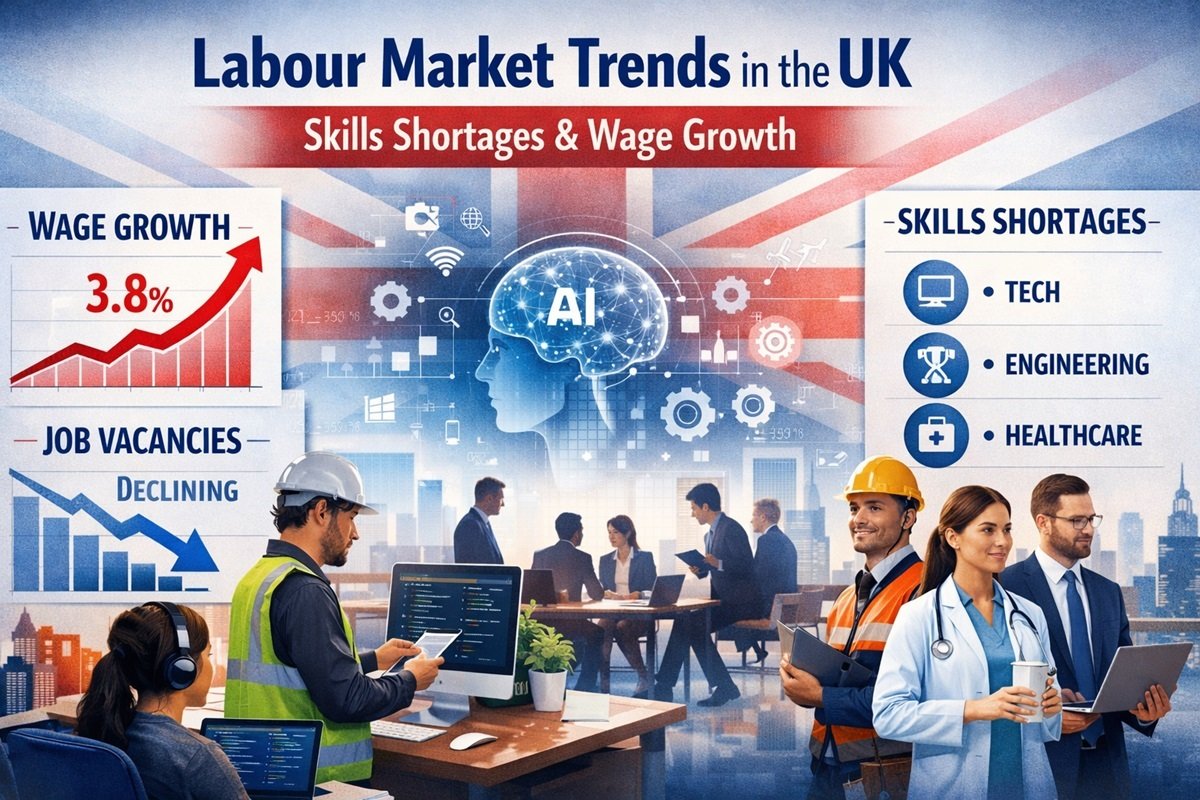
- Skills and talent supply — despite the policy ambitions, the practical reality is that many UK businesses continue to struggle to find workers with the skills they need. Immigration policy changes have constrained access to overseas talent in certain sectors without an adequate domestic pipeline to compensate
Opportunities Created by the Evolving Policy Environment
For every constraint, there is a corresponding opportunity for businesses that are paying attention. The current policy environment creates meaningful advantages for those positioned to capture them.
The industrial strategy’s focus on advanced manufacturing, life sciences, creative industries, and clean energy is directing significant public investment into these sectors — creating procurement opportunities, co-investment vehicles, and talent development programmes that ambitious businesses can access.
The government’s commitment to public sector digital transformation represents a substantial and growing market for technology businesses. NHS digitisation, HMRC modernisation, local government digital services — the scale of the opportunity for the right providers is considerable.
And the UK’s genuine strengths — its world-class universities, its financial infrastructure, its legal system, its time zone, its language — remain as compelling as ever for international businesses considering where to base their European or global operations. Policy can reinforce or undermine these advantages; the current direction, despite its complexities, is broadly supportive of the UK’s position as a leading destination for business investment.
Conclusion: Policy Is Not Your Enemy — Passivity Is
The businesses that will thrive in the UK over the next decade are not the ones that simply weather policy changes — they are the ones that engage with the policy environment as a strategic input to their planning.
That means staying genuinely informed about UK business regulation and tax policy — not just when changes are announced, but during consultation periods when there is still an opportunity to shape outcomes. It means accessing the support and incentive frameworks that the government makes available, rather than leaving money on the table out of unfamiliarity. And it means thinking of sustainability, digital transformation, and workforce development not as compliance obligations but as genuine sources of competitive advantage.
The direction of UK business growth in the years ahead will be shaped significantly by the policy choices being made now. The companies that understand this — that treat the policy landscape as part of their operating environment rather than an external irritant — will be the ones writing the success stories.
Uncertainty is the permanent condition of business. Policy fluency is the permanent advantage of the businesses that outperform within it.