Global Economic Shifts and Their Impact on the UK Economy
The UK economy has never operated in isolation — but the degree to which global forces are now driving domestic outcomes has reached a new intensity. From supply chain shocks and geopolitical realignments to the uneven unravelling of decades-long globalisation, the international economic landscape is being redrawn. And the UK, with its open economy, global financial centre, and post-Brexit reorientation, sits at a particularly consequential intersection of these shifts.

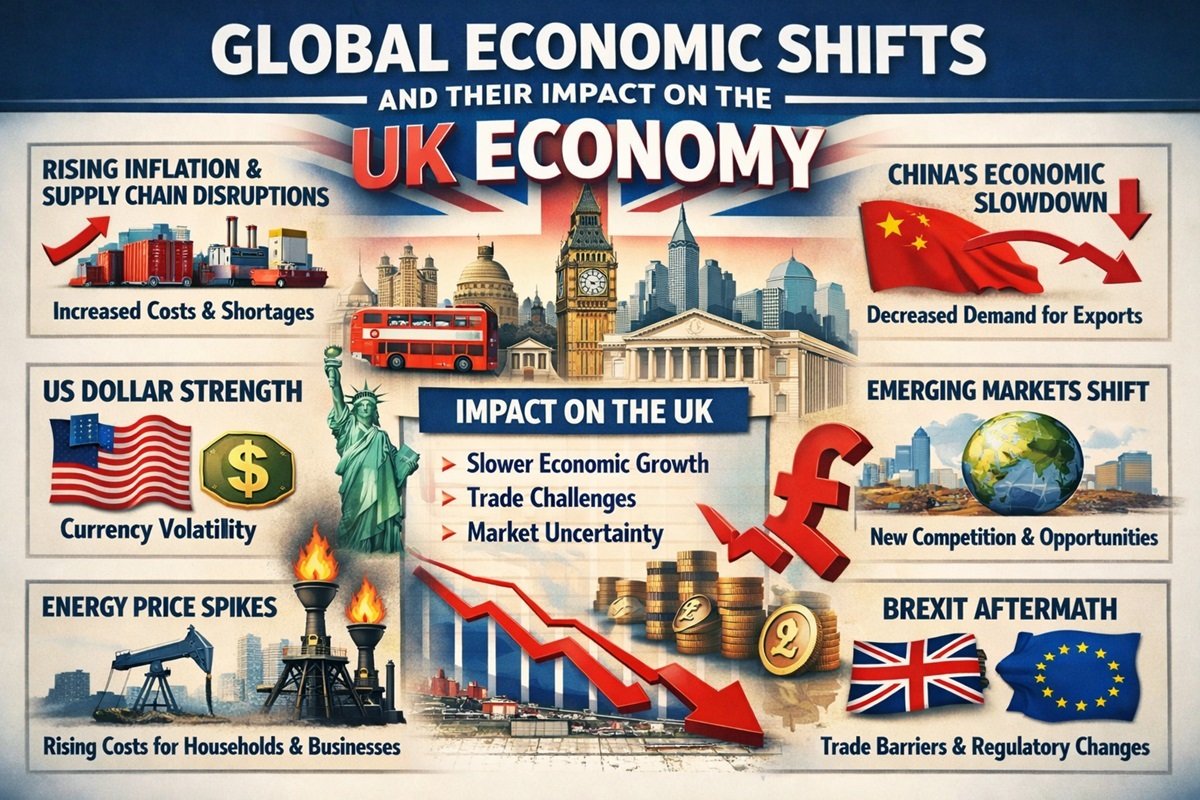
The UK economy has never operated in isolation — but the degree to which global forces are now driving domestic outcomes has reached a new and uncomfortable intensity. From supply chain shocks and geopolitical realignments to the uneven unravelling of decades-long globalisation, the international economic landscape is being fundamentally redrawn.
And the UK, with its open economy, globally significant financial centre, and post-Brexit strategic reorientation, sits at a particularly consequential intersection of these global economic shifts. What happens in Washington, Beijing, Frankfurt, or Riyadh does not stay there. It arrives on UK shores through trade flows, currency movements, energy prices, investor sentiment, and supply chain pressure — often faster and harder than policymakers anticipate.
This article examines the most significant global economic shifts underway, how they are transmitting into the UK economic outlook, what they mean for key sectors and consumers, and what businesses and policymakers can do to navigate the turbulence with strategic intelligence.
The Global Economic Context: Forces Reshaping the World Economy
To understand the global economy’s impact on the UK, you first need to map the major forces currently in play. These are not cyclical fluctuations that will self-correct in a quarter or two. They are structural shifts — changes in the underlying architecture of the global economy — that will play out over years and decades.
Persistent Inflation and the Interest Rate Hangover
The inflationary surge that began in the wake of the pandemic was, in many ways, the first major test of a post-globalisation world. Supply chains built for efficiency rather than resilience snapped under the pressure of demand shocks, logistics bottlenecks, and energy price spikes. The result was the sharpest synchronised rise in global inflation in four decades.
Central banks across the developed world responded with the fastest rate-hiking cycle in a generation. The US Federal Reserve, the European Central Bank, and the Bank of England all raised rates aggressively — a coordinated tightening that squeezed borrowing costs, compressed asset valuations, and slowed growth simultaneously across multiple major economies.
The hangover from this tightening cycle is still being felt. While inflation has moderated, its stickiness — particularly in services, wages, and housing — means that rate cuts are coming more slowly than markets initially hoped. The global impact of inflation on the UK has been amplified by the country’s specific exposure to energy imports and dollar-denominated commodity markets.
Geopolitical Fractures and the End of the Washington Consensus
The post-Cold War assumption of an increasingly integrated, rules-based global economy — the so-called Washington Consensus — is under serious strain. The US-China strategic competition has introduced a new logic into global trade: not simply efficiency and comparative advantage, but national security, supply chain sovereignty, and technological independence.
The war in Ukraine added another dimension. Energy markets were violently disrupted. European economies faced the forced abandonment of a decades-long dependence on Russian gas. Global food supply chains — critically dependent on Ukrainian grain and fertiliser — were thrown into uncertainty. And the geopolitical map of global trade alliances shifted in ways that are still working themselves out.
For the UK, these geopolitical fractures create both exposure and opportunity. As a major trading nation with deep financial ties to both Western and Asian markets, the geopolitical economy of the UK is being stress-tested at precisely the moment when its post-Brexit trading architecture is still being assembled.
The Deglobalisation Trend: Reshoring, Friend-Shoring, and Strategic Autonomy
Perhaps the most structurally significant shift is the quiet reversal of the globalisation trend that defined the previous three decades. The hyper-efficient global supply chains that drove down costs and powered consumer prosperity are being deliberately unwound — replaced by shorter, more resilient, but inherently more expensive domestic or allied-nation alternatives.
The US Inflation Reduction Act, with its massive subsidies for domestic clean technology manufacturing, sent a clear signal: industrial policy is back, and countries are prepared to pay a significant premium for supply chain sovereignty. The EU has followed with its own Net Zero Industry Act. China has been pursuing technological self-sufficiency for years.
The UK, as it navigates its post-Brexit identity, must define its own position within this deglobalising world — a challenge that is as much strategic as it is economic.
How Global Shifts Are Transmitting Into the UK Economy
Global forces do not affect the UK economy in the abstract. They transmit through specific, identifiable channels — and understanding these transmission mechanisms is essential for anyone trying to interpret what is happening to UK growth, inflation, investment, and living standards.
Trade Flows and the Sterling Effect
The UK runs a persistent current account deficit — meaning it imports significantly more than it exports. This structural position makes the UK particularly sensitive to global trade disruptions, commodity price swings, and currency movements.
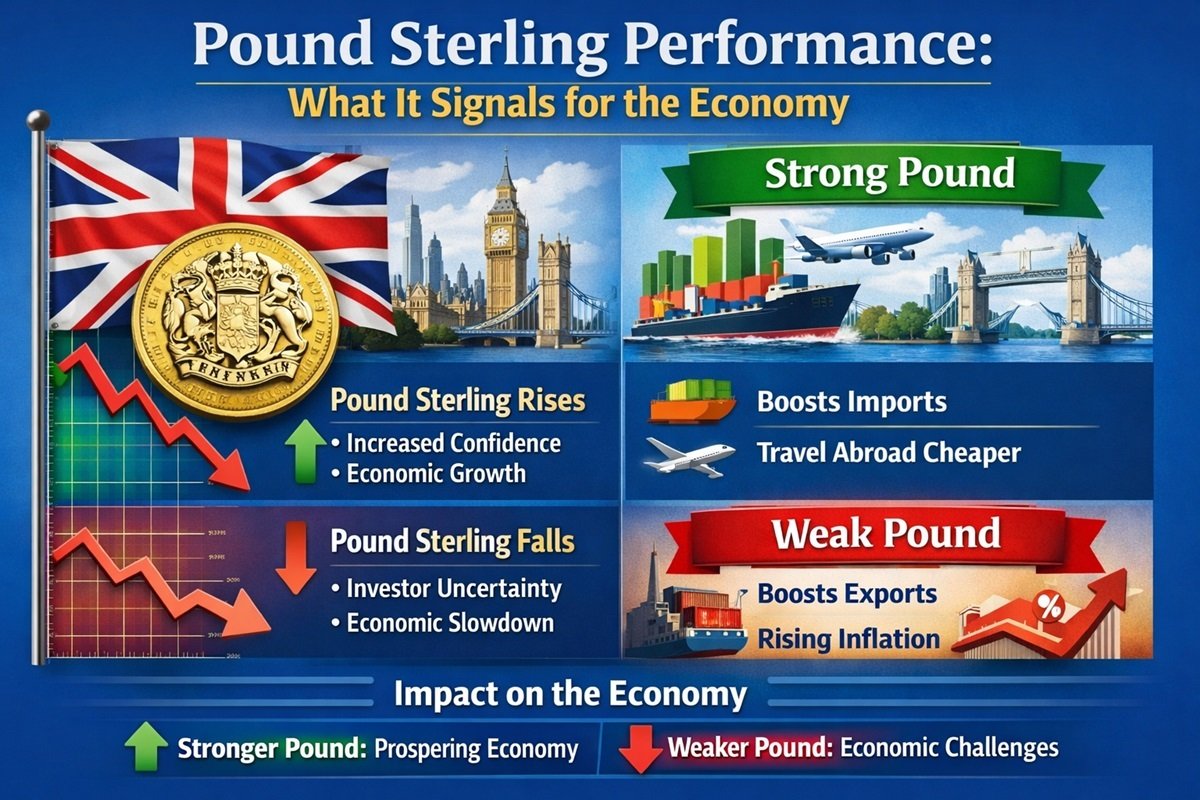
When global uncertainty spikes, sterling tends to weaken — a pattern seen vividly during the pandemic, the 2022 mini-budget crisis, and periods of US dollar strength. A weaker pound makes imports more expensive, feeding directly into domestic inflation. For businesses reliant on dollar-denominated commodities — energy, metals, agricultural inputs — sterling weakness is a direct cost pressure with no easy offset.
On the export side, the picture is more complex. A weaker pound should theoretically boost UK export competitiveness. But for service-dominated exports — professional services, financial services, education — price competitiveness is less relevant than regulatory access, reputation, and relationships. These are areas where post-Brexit trade policy has created friction that currency movements alone cannot resolve.
Investment Flows and the UK’s Capital Attraction Challenge
Foreign direct investment is one of the most sensitive indicators of international confidence in a national economy. The UK has historically been one of the largest recipients of FDI in Europe — a position built on the attractiveness of London as a global financial and professional services hub, the stability of its legal framework, and its role as a gateway to European markets.
Post-Brexit, that gateway function has been partially diminished. Some FDI that previously flowed into the UK as a European base has been diverted to Dublin, Amsterdam, Paris, and Berlin. At the same time, the global competition for investment — intensified by US and EU industrial policy subsidies — has raised the stakes considerably.
The UK needs a compelling investment narrative that goes beyond inertia. The government’s International Investment Summit and its focus on science, technology, and clean energy as investment magnets represents a coherent strategic response — but translating ambition into committed capital remains an ongoing challenge.
Energy Markets and Structural Vulnerability
The UK’s energy vulnerability was exposed starkly by the post-Ukraine energy price crisis. As a net energy importer with significant dependence on global gas markets, the UK was among the European economies most acutely affected by the energy price shock that followed Russia’s invasion.
Household energy bills doubled. Business energy costs surged. Inflation was significantly amplified by the energy component in a way that the Bank of England’s interest rate tools were poorly equipped to address — you cannot solve a supply shock with demand-side monetary policy.
The crisis has, however, accelerated the UK’s transition towards energy independence. Investment in offshore wind, the revival of nuclear ambitions, and the push for domestic hydrogen production are all — in part — responses to the exposure that global energy market disruption revealed.
Sector-by-Sector: The UK’s Uneven Exposure to Global Shifts
Global economic forces do not affect all sectors equally. The UK market challenges created by the current global environment are distributed unevenly across the economy — with some sectors facing existential pressure and others finding genuine opportunity.
Financial Services: Global Hub Under Pressure
The City of London’s position as the world’s leading international financial centre is both the UK’s greatest economic asset and its most complex geopolitical exposure. It generates enormous tax revenues, employs hundreds of thousands of people, and positions the UK at the centre of global capital flows.
But it also means the UK is unusually sensitive to shifts in global financial markets, regulatory divergence, and geopolitical tensions. The post-Brexit loss of EU market access has prompted regulatory reform designed to make the UK’s financial framework more competitive independently. The question is whether the UK can attract new business from global markets — particularly Asia and the Middle East — fast enough to offset what has been lost from Europe.
Manufacturing: Reshoring as Risk and Opportunity
UK manufacturing has faced a particularly complex set of global pressures. Higher energy costs, supply chain disruption, post-Brexit customs friction, and the challenge of competing with heavily subsidised manufacturing in the US and Asia have created a difficult environment.
Yet the deglobalisation trend also creates an opportunity. As companies across sectors rethink their supply chain geographies, UK manufacturing — particularly in advanced sectors like aerospace, defence, pharmaceuticals, and precision engineering — is well positioned to benefit from reshoring and friend-shoring dynamics. Government industrial strategy support for these sectors is beginning to align with these global forces.
Energy: Transition as Competitive Advantage
The global shift toward clean energy is, for the UK, both a necessity and a genuine industrial opportunity. The UK has world-class offshore wind resources, significant academic and engineering capability in clean technology, and an established financial services sector that is developing deep expertise in green finance and sustainability-linked investment.
The transition is not without cost or complexity — grid infrastructure, planning reform, and skills development all require sustained investment and political will. But the strategic direction is clear, and the UK’s early positioning in offshore wind in particular has given it a head start in a sector that will define the global energy economy for decades.
Retail and Consumer Markets: The Squeeze Endures
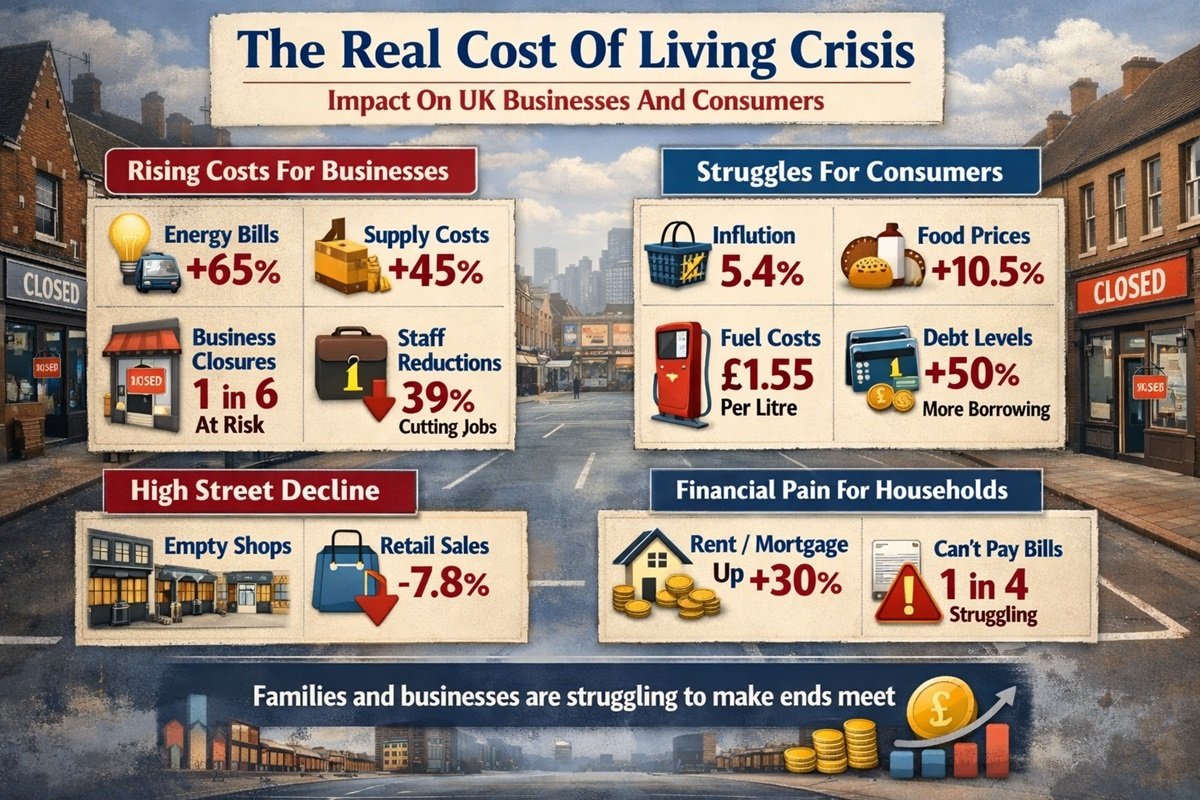
UK consumers have been among the most exposed in the developed world to the global inflation impact on the UK. High inflation, rising mortgage costs, and energy price shocks compressed household disposable incomes significantly. Consumer spending — the engine of a services-dominated economy — pulled back sharply.
The retail sector has faced a brutal combination of cost inflation (wages, energy, logistics) and demand compression simultaneously. The businesses that have navigated this best are those that have been most ruthless about cost efficiency, most creative about value communication, and most agile in responding to shifting consumer behaviour.
Technology: A Relative Bright Spot
The UK’s technology sector has shown more resilience than most in the face of global uncertainty. Despite the global correction in tech valuations and the pullback in venture capital, the UK remains the third-largest tech ecosystem in the world. London continues to attract global tech talent, AI investment is accelerating, and the government’s focus on the sector as a national priority provides meaningful tailwinds.
Brexit’s Role in the UK’s Global Vulnerability and Resilience
Any honest analysis of global economic trends and their impact on the UK must grapple with the Brexit variable. The UK’s departure from the EU did not cause the global economic shifts underway — but it has shaped how those shifts land on the UK economy.
On the vulnerability side, Brexit removed the shock-absorbing benefits of EU membership — single market access, coordinated fiscal responses, shared regulatory frameworks — at precisely the moment when global shocks required robust collective mechanisms to manage.
On the resilience side, Brexit has given the UK the freedom to develop its own industrial policy, regulatory framework, and trade strategy in response to global shifts — without being constrained by EU state aid rules or the need to achieve consensus among 27 member states. How effectively this freedom is used will determine whether Brexit ultimately proves to be a structural disadvantage or a strategic reset.
Government and Bank of England Responses: Navigating the Tightrope
The UK policy response to global economic shifts has involved a careful — sometimes uncomfortable — balancing act between managing immediate pressures and positioning for long-term resilience.
The Bank of England’s aggressive rate-hiking cycle was the right response to a genuine inflation emergency, but it imposed significant costs on mortgage holders, businesses with floating-rate debt, and the broader housing market. The subsequent gradual easing of rates reflects a careful reading of both domestic conditions and global monetary policy signals from the Federal Reserve.
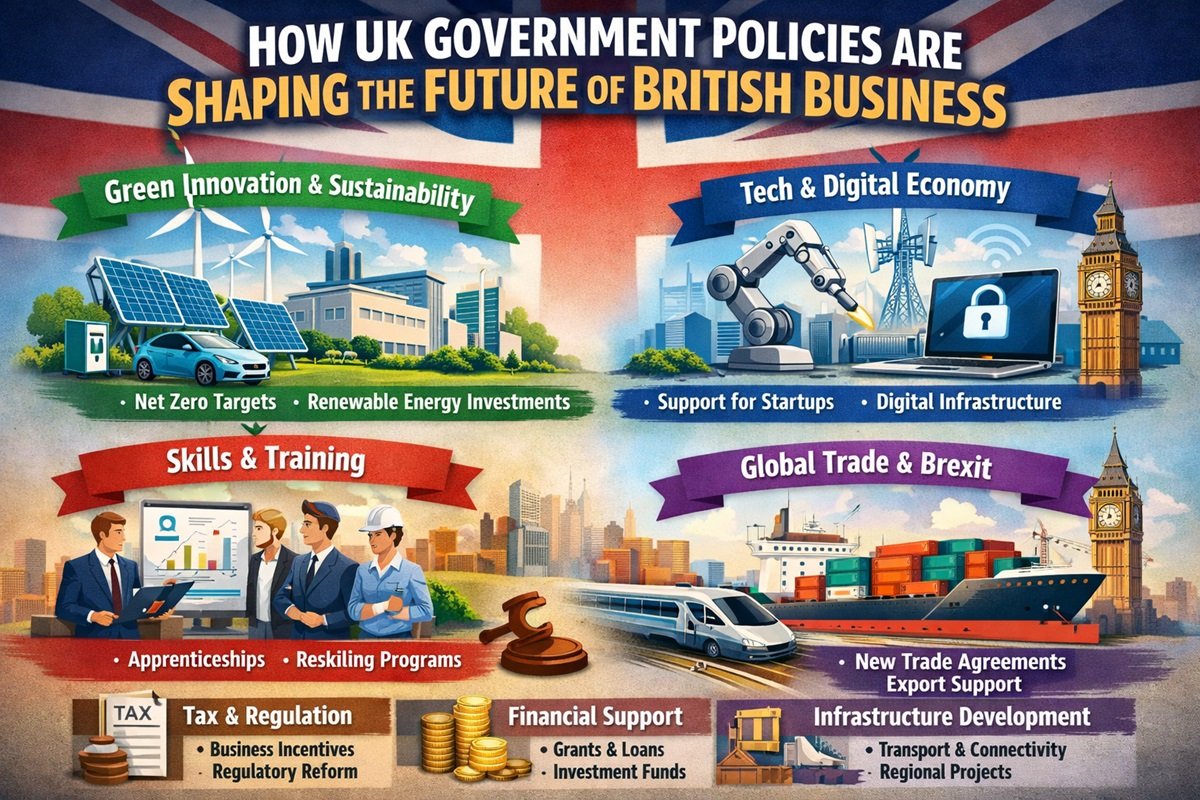
On the fiscal side, the government faces a genuinely constrained set of choices. Debt-to-GDP ratios remain elevated, fiscal headroom is limited, and the demands of public services are intense. The challenge is to deploy available fiscal resources in ways that build long-term productive capacity — in infrastructure, skills, clean energy, and innovation — rather than simply managing short-term political pressures.
- The National Wealth Fund — designed to catalyse private investment in clean energy and industrial transition — represents a meaningful strategic tool if deployed with discipline
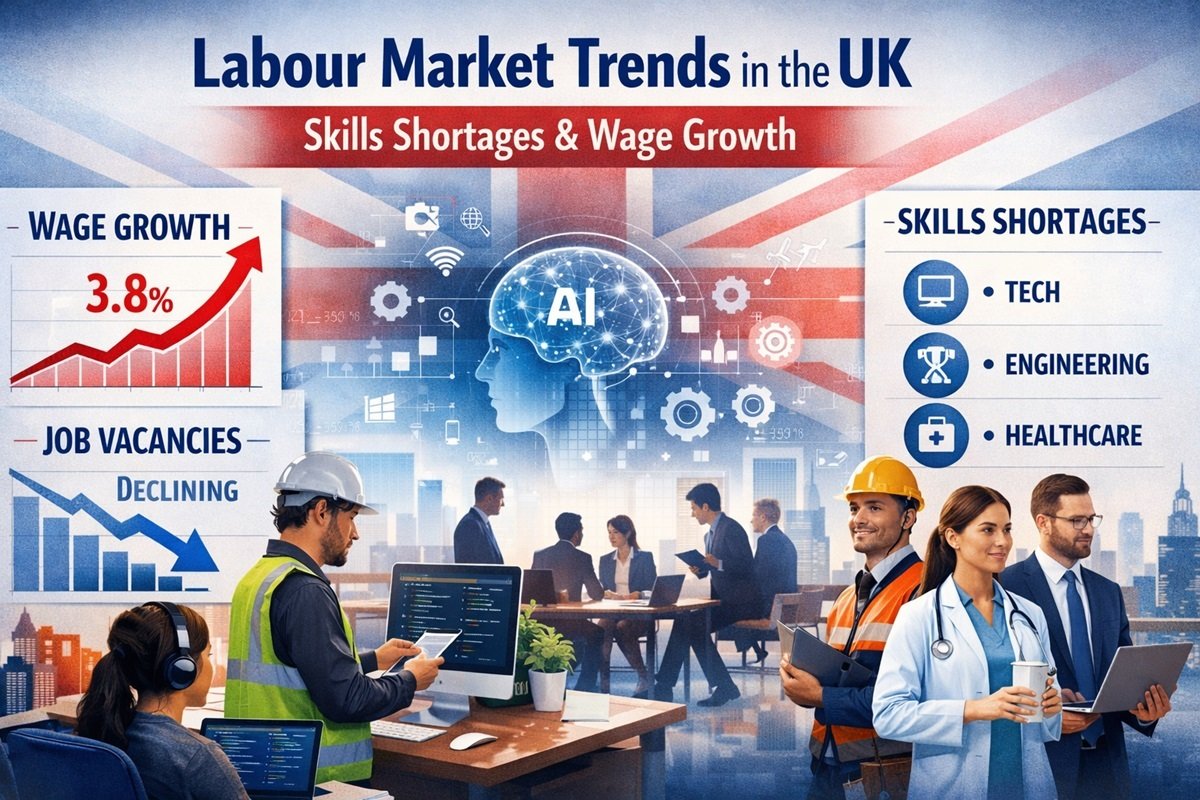
- Skills England — the workforce development initiative — addresses a structural constraint that limits the UK’s ability to capitalise on global economic opportunities
- The AI Opportunities Action Plan — positions the UK to benefit from what may be the most economically significant technology shift of the coming decade
Risks and Opportunities: The Strategic Landscape for UK Businesses
For UK businesses navigating this environment, the risks are real — but so are the opportunities for those with the clarity and agility to pursue them.
Key Risks to Monitor
- Escalating geopolitical conflict — further disruption to energy markets, trade routes, or financial systems from geopolitical events in Ukraine, the Middle East, or the Taiwan Strait would have significant UK implications
- US trade policy shifts — changes to US tariff policy or bilateral trade relationships could affect UK exporters and the competitiveness of UK-based manufacturing
- China slowdown — a sustained deceleration in Chinese economic growth would reduce global demand, soften commodity prices, and weigh on UK financial services firms with Asian exposure
- Domestic political instability — policy uncertainty remains a significant deterrent to long-term business investment
Strategic Opportunities Worth Pursuing
- Clean energy and green finance — the global energy transition is creating vast investment and commercial opportunities for UK businesses positioned in this space
- AI and deep technology — the UK’s research base, talent pipeline, and regulatory agility make it well placed to lead in areas of AI application and deployment
- Defence and security — rising global defence expenditure is creating significant procurement opportunities for UK defence manufacturers and technology companies
- Trade diversification — CPTPP membership and a growing network of bilateral trade agreements offer genuine market expansion opportunities for export-oriented UK businesses
- Professional and financial services — as emerging market economies develop more sophisticated capital markets, the demand for UK expertise in finance, law, insurance, and consulting will grow
Strategic Insights for UK Businesses Operating in a Shifting Global Economy
For business leaders, the most dangerous response to global economic uncertainty is paralysis — waiting for clarity that may never fully arrive. The most productive response is building the organisational capabilities to navigate ambiguity with speed and strategic coherence.
Practical steps that UK businesses should be taking now include:
- Supply chain mapping and stress-testing — understanding exactly where your critical inputs come from and what happens if those sources are disrupted is no longer optional risk management; it is basic operational prudence
- Currency risk management — businesses with significant foreign currency exposure should be working with treasury professionals to implement hedging strategies appropriate to their risk profile
- Market diversification — over-dependence on any single market or customer geography is a vulnerability. The businesses that are thriving are those with the broadest and most diversified revenue bases
- Scenario planning — building at least three scenarios (base case, adverse, and severely adverse) into annual planning cycles allows businesses to make strategic decisions with their eyes open to a range of possible futures
- Engaging with policy — in an era of active industrial policy, businesses that engage with government consultations, sector bodies, and policy processes are better positioned to shape outcomes rather than simply react to them
The Future Outlook: Where the UK Economy Goes from Here
The UK economic outlook in a shifting global landscape is neither straightforwardly optimistic nor grimly pessimistic. It is genuinely contingent — on policy choices, on global developments, and on the collective ambition and adaptability of British businesses and institutions.
The structural positives are real: a world-class financial centre, leading universities and research institutions, a highly skilled professional services workforce, a stable legal and democratic framework, and genuine competitive strengths in technology, creative industries, and clean energy. These are not trivial advantages.
The structural challenges are equally real: a persistent productivity gap relative to peer economies, an under-investment in infrastructure and skills that spans decades, a housing market that is choking the labour mobility that a dynamic economy requires, and a post-Brexit trading relationship with Europe that remains suboptimal.
The global economic shifts underway — deglobalisation, the energy transition, the AI revolution, geopolitical realignment — will reshape every major economy. The UK’s position within that reshaping is not predetermined. It will be determined by the quality of its policy choices, the ambition of its business community, and the willingness to engage with the world on its own terms rather than simply reacting to forces beyond its borders.
Conclusion: Uncertainty as the New Normal — and the Case for Strategic Clarity
The era of predictable, low-volatility global economics is over. The global economic shifts affecting the UK economy are not a temporary disruption from which a return to normalcy can be expected. They are the new normal — a permanently more volatile, more multipolar, and more contested global economic environment in which the UK must find its footing and assert its strategic identity.
For businesses, the imperative is clear: build resilience into your operations, diversify your markets and supply chains, invest in the capabilities — people, technology, and intelligence — that allow you to adapt faster than your competitors, and engage actively with the policy environment rather than treating it as an external variable beyond your influence.
For policymakers, the challenge is to provide the stability, investment, and strategic coherence that businesses need to make long-term decisions — resisting the temptation of short-term political calculus in favour of the durable structural reforms that will determine Britain’s economic trajectory for a generation.
The UK has navigated far greater economic challenges than the current moment. The countries and companies that emerge strongest from periods of global disruption are invariably those that respond not with retreat, but with reinvention. The opportunity to reinvent is very much still open.