
The pound sterling is more than just a currency. It is a real-time barometer of how the world views the UK economy. Every movement up or down in GBP carries a signal about inflation, growth, political stability, and investor confidence. These are signals that businesses, consumers, and policymakers ignore at their peril.
When sterling fell sharply in the aftermath of the 2022 mini-budget, it was not simply a market reaction to a fiscal announcement. It was a verdict. Global investors, traders, and institutions were communicating, in the bluntest possible language, their assessment of UK economic credibility. The cost of that verdict was felt in mortgage rates, import prices, and household energy bills within weeks.
Understanding pound sterling performance is therefore not a niche interest for foreign exchange traders. It is essential context for any business owner, investor, or consumer trying to make sense of the UK economic environment. This article unpacks what drives GBP, what its recent movements signal, and what the implications are for the economy in the period ahead.
The Role of Sterling in the UK Economy
Sterling is the fifth most traded currency in the world and the third largest reserve currency globally, behind the US dollar and the euro. This gives the pound an outsized importance relative to the size of the UK economy itself.
As a reserve currency, sterling is held by central banks, sovereign wealth funds, and institutional investors around the world. This creates a structural demand for GBP that provides a degree of stability. But it also means that shifts in global sentiment about the UK economy can translate into significant and rapid currency movements.
The pound plays several simultaneous roles in the UK economy. It is the medium of exchange for domestic transactions, the unit of account for pricing goods and services, and the store of value for savings. When sterling is stable and strong, these functions operate smoothly. When sterling is volatile or weak, the distortions ripple across every part of the economy.
The health of the pound is, in many respects, a summary judgment on the health of the UK economy as a whole. Understanding what drives it is therefore fundamental to understanding where the economy is heading.
Recent GBP Performance: Reading the Trends
The recent history of sterling is a story of significant volatility punctuated by partial recoveries. To understand the current UK currency trends, it helps to trace the key movements of recent years and what they were responding to.
The Post-Brexit Baseline
The Brexit referendum in June 2016 was one of the most dramatic single-day shocks in sterling’s modern history. GBP fell sharply against both the US dollar and the euro in the immediate aftermath, reflecting the deep uncertainty that the vote created about the UK’s future trading relationships, investment attractiveness, and economic trajectory.
Sterling never fully recovered to its pre-referendum levels against the euro in particular. This persistent discount has become something of a structural feature of the post-Brexit GBP landscape, reflecting ongoing uncertainty about the UK-EU relationship and the long-term economic consequences of separation from the single market.
The 2022 Crisis and the Truss Effect
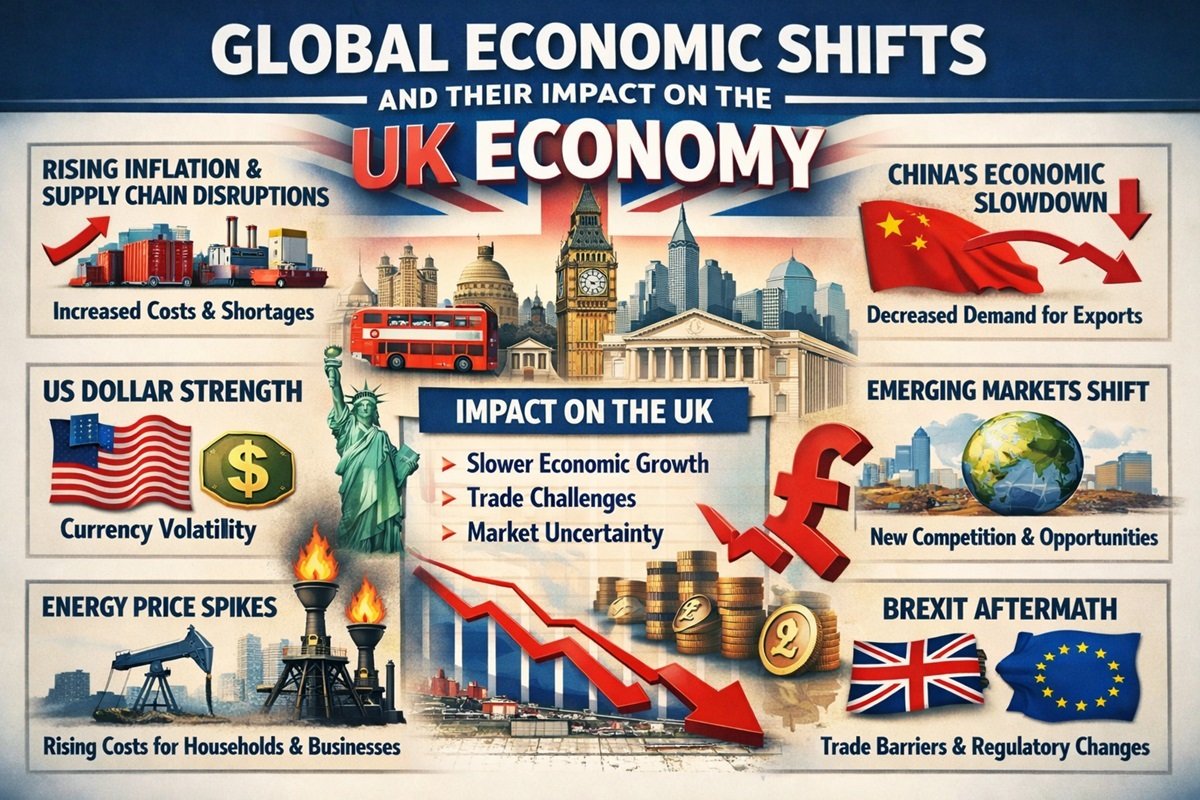
The most acute episode of sterling weakness in recent memory came in September and October 2022, when the Truss government’s mini-budget triggered a confidence crisis among international investors. GBP fell to near-parity with the US dollar, a level not seen for decades, and gilt yields spiked to levels that threatened the stability of pension funds.
The episode was a stark illustration of how quickly political decisions can transmit into currency markets. It was also a reminder that the pound, for all its status as a major global currency, is not immune to the kind of confidence shocks that are more commonly associated with emerging market currencies.
The Recovery and Current Position
Sterling staged a meaningful recovery once political stability was restored and the Bank of England intervened to stabilise gilt markets. The subsequent period has seen GBP trade in a more settled range against both the dollar and the euro, though it remains below the levels that prevailed before the Brexit vote.
The current GBP vs USD dynamic is significantly shaped by the relative monetary policy trajectories of the Bank of England and the Federal Reserve. When US interest rates are high and the Fed is hawkish, dollar strength tends to weigh on GBP regardless of domestic UK conditions. This external pressure is an important and often underappreciated dimension of sterling performance.
Key Factors Driving Pound Sterling Performance
Currency markets are complex and multi-dimensional, but the key drivers of GBP performance can be grouped into a relatively small number of interconnected factors. Understanding these drivers is the foundation of any serious analysis of sterling’s direction.
Inflation: The Currency Eroder
Inflation is one of the most fundamental drivers of currency value over the medium and long term. A currency that is associated with persistently high inflation will, over time, depreciate in value relative to currencies with lower inflation rates. This is simply a reflection of the fact that higher inflation erodes purchasing power.
The UK’s experience of inflation running significantly above the Bank of England’s 2% target for an extended period was therefore a meaningful headwind for sterling. The inflation and UK currency impact is felt through two channels: the direct erosion of GBP’s real value, and the market expectations about how aggressively the Bank of England will respond with interest rate rises.
When inflation is high and persistent, markets expect higher interest rates. Higher interest rates, all else being equal, tend to attract capital inflows and support the currency. This is why the Bank of England’s rate-hiking cycle provided some support to GBP even as inflation was causing real economic pain.
Bank of England Interest Rates: The Primary Policy Lever
The relationship between Bank of England interest rates and sterling is one of the most direct and well-established in currency markets. Higher interest rates make UK assets more attractive to international investors seeking yield, driving demand for GBP. Lower interest rates reduce that yield differential and can weigh on the currency.
The Bank of England’s rate-setting decisions are therefore watched extremely closely by currency traders, not just for their domestic economic implications, but for their impact on GBP. Every Monetary Policy Committee meeting, every set of minutes, and every public statement from the Governor carries potential market-moving significance.
The current challenge for the Bank is navigating the transition from a tightening cycle to an easing cycle in a way that manages the currency implications carefully. Cutting rates too aggressively could weaken sterling and import additional inflationary pressure at a time when the inflation battle is not fully won. Moving too slowly risks unnecessarily prolonging the economic slowdown.
Economic Growth: The Underlying Fundamentals
Currency markets are, at their core, forward-looking assessments of economic fundamentals. An economy that is growing strongly, attracting investment, and generating productivity gains will tend to see its currency appreciate over time. An economy that is stagnating, losing competitiveness, or running persistent external deficits will tend to see its currency under pressure.
The UK’s growth performance in recent years has been modest relative to peer economies. Productivity growth remains weak. Business investment has been subdued. The current account deficit, while it fluctuates, remains a structural feature that requires ongoing capital inflows to finance. These fundamental factors create a background of moderate downward pressure on sterling that is distinct from the short-term volatility created by policy decisions or political events.
Political Stability: The Confidence Premium
Political stability carries a meaningful premium in currency markets. Investors and institutions allocating capital internationally seek environments where the rules are clear, property rights are secure, and policy is predictable. The UK has historically commanded a significant stability premium, reflected in the pound’s status as a reserve currency.
The events of 2022 demonstrated how quickly this premium can be withdrawn when political credibility is undermined. The lesson for policymakers is that the confidence of international markets is not a given. It is earned through consistent, credible, and coherent economic management. The restoration of that confidence after the 2022 crisis was a significant achievement, but the episode left a lasting reminder of the currency’s sensitivity to political risk.
Global Market Conditions and Risk Appetite
Sterling tends to behave as a risk-sensitive currency in global markets. During periods of heightened global uncertainty, investors typically move capital into perceived safe havens, most notably the US dollar and Japanese yen. This risk-off dynamic tends to weigh on GBP regardless of domestic UK conditions.
Conversely, when global risk appetite improves and investors are willing to take on more exposure to growth-oriented assets, sterling tends to benefit. Understanding where the global cycle sits in terms of risk appetite is therefore an important input into any GBP outlook assessment.
Impact of GBP Movements: Who Wins, Who Loses
The practical consequences of sterling’s movements are not evenly distributed. Different groups experience currency fluctuations very differently, and understanding these asymmetries is essential for businesses and investors trying to manage their exposure.
Impact on UK Businesses
For businesses, the impact of GBP movements depends critically on their position in the import-export balance. The effects break down clearly:
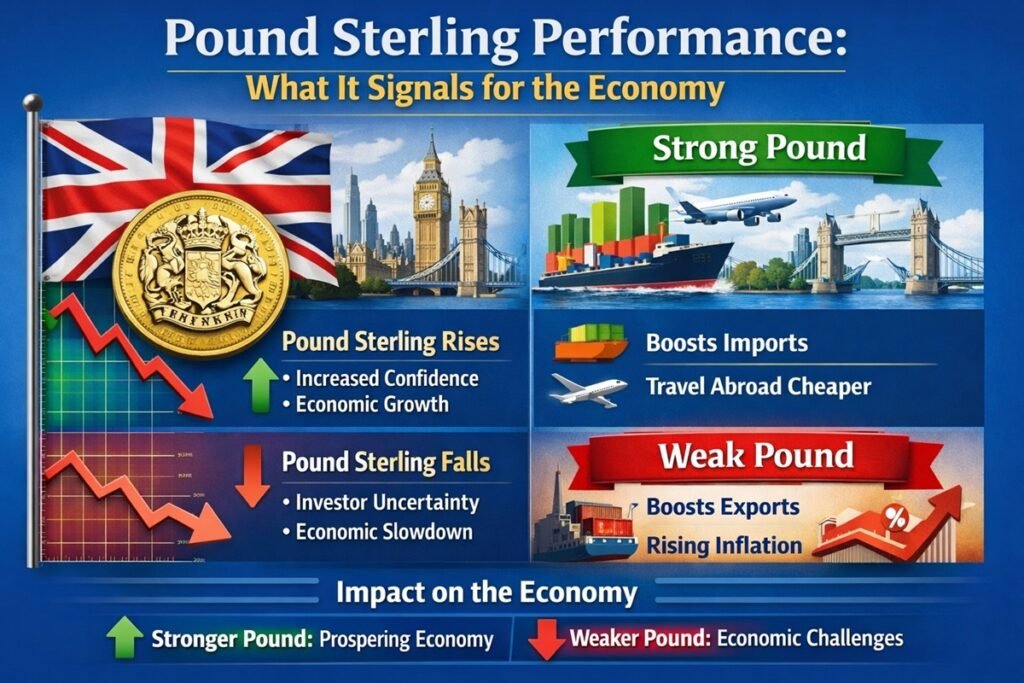
- Exporters benefit from a weaker pound. When sterling falls, UK goods and services become cheaper for international buyers. A UK manufacturer selling into the US market, for example, effectively receives a price cut for American customers when GBP weakens against the dollar, without having to change its own pricing. This can drive volume growth and improve competitiveness.
- Importers are hurt by a weaker pound. Businesses that source materials, components, or finished goods from overseas face higher costs when sterling falls. These cost increases either compress margins or are passed through to customers as price increases, contributing to inflationary pressure.
- Dollar-denominated inputs create a specific vulnerability. Many globally traded commodities, including oil, gas, metals, and agricultural products, are priced in US dollars. When GBP weakens against the dollar, the sterling cost of these inputs rises automatically, creating inflationary pressure that affects virtually every business in the economy to some degree.
A practical scenario: consider a UK food manufacturer sourcing wheat, packaging materials, and energy, all with significant dollar or euro-denominated costs. A 10% depreciation in sterling against these currencies could add several percentage points to their cost base overnight, with no corresponding increase in the revenues they earn from domestic customers. The margin pressure is immediate and unavoidable.
Impact on Consumers
For consumers, the most direct experience of sterling weakness is through the prices they pay. The UK currency impact on consumers operates through several channels:
- Imported goods become more expensive. Electronics, clothing, food, and household items with significant import content all tend to rise in price when sterling weakens. This is a regressive impact, as lower-income households spend a higher proportion of their income on these necessities.
- Fuel prices are affected. Petrol and diesel prices, closely tied to globally traded oil priced in dollars, rise when sterling weakens against the US currency. This affects both household budgets and the cost of transporting goods throughout the supply chain.
- Overseas travel becomes more expensive. When GBP weakens against the euro or dollar, UK holidaymakers receive less foreign currency for their pounds, effectively making overseas travel and holidays more expensive.
- Mortgage costs can be indirectly affected. If sterling weakness forces the Bank of England to maintain higher interest rates for longer to prevent imported inflation, the consequences feed through to variable rate mortgages and new fixed-rate deals.
Impact on Investors and Capital Markets
For investors, sterling movements create both risk and opportunity. International investors holding UK assets face currency risk in addition to the underlying asset risk. A foreign investor who buys UK equities or bonds must factor in the impact of GBP movements on their returns when repatriated to their home currency.
This dynamic means that significant GBP depreciation can deter foreign capital inflows, reducing the availability and increasing the cost of investment in the UK economy. Conversely, when sterling is perceived as undervalued, UK assets look attractively priced to international investors, potentially driving inflows and supporting both the currency and asset prices.
The FTSE 100’s unusual relationship with sterling is worth noting. Because so many of the largest UK-listed companies generate the majority of their revenues in foreign currencies, particularly dollars, a weaker pound can actually boost their reported sterling earnings. This explains the counterintuitive pattern whereby the FTSE 100 sometimes rises when sterling falls.
The Bank of England’s Role in Currency Stability
The Bank of England does not directly target the value of sterling. Unlike some central banks that intervene actively in foreign exchange markets to defend a specific exchange rate, the Bank operates under an inflation-targeting mandate with exchange rate movements treated as one input among many.
However, the Bank’s interest rate decisions are the single most powerful tool it has for influencing GBP indirectly. The 2022 crisis, when the Bank was forced to intervene in gilt markets to prevent a systemic pension fund crisis triggered by sterling’s collapse, illustrated that currency stability and financial stability are deeply interconnected in practice, even if the mandate does not explicitly reference the exchange rate.
The Bank’s communication strategy, through MPC minutes, quarterly Monetary Policy Reports, and Governor speeches, plays an important role in anchoring market expectations and preventing the kind of uncertainty-driven volatility that can become self-reinforcing. Clear, credible, and consistent communication is itself a tool of currency management, even if it is not labelled as such.
Risks and Opportunities Linked to Sterling Volatility
Sterling volatility creates a landscape of risks and opportunities that varies significantly depending on a business’s or investor’s position and time horizon.
Key Risks
- Imported inflation risk: sustained sterling weakness can entrench inflation, forcing the Bank of England to keep rates higher for longer and creating a difficult combination of high borrowing costs and rising prices
- Investor confidence risk: episodes of rapid sterling depreciation can trigger broader confidence crises, as seen in 2022, with consequences that extend well beyond the currency market itself
- Supply chain cost risk: businesses with unhedged foreign currency exposure can face sudden and material cost increases when sterling moves sharply
- Competitiveness risk from sterling strength: while a stronger pound reduces import costs and inflation, it can damage the competitiveness of UK exporters and reduce the earnings of multinationals when translated back into sterling
Key Opportunities
- Export competitiveness window: periods of sterling weakness create genuine pricing advantages for UK exporters, particularly in manufacturing, creative services, and tourism
- UK asset attractiveness: when GBP is perceived as undervalued, UK equities, property, and businesses look attractively priced to international buyers, potentially driving inflows of foreign direct investment
- Currency hedging as a competitive advantage: businesses that invest in sophisticated currency risk management can outperform peers who leave exposure unmanaged, particularly in industries with high foreign currency content
Strategic Insights for Businesses and Investors
For businesses and investors navigating the current currency market in the UK, several practical strategies are worth considering.
- Map your currency exposure carefully. Many businesses underestimate the degree to which their costs and revenues are affected by sterling movements. A detailed currency exposure analysis is the essential starting point for any risk management strategy.
- Consider hedging for material exposures. Forward contracts, options, and natural hedging strategies can all provide meaningful protection against adverse currency movements. The right approach depends on the size and nature of the exposure, and specialist treasury advice is valuable for significant exposures.
- Diversify revenue geographies. Businesses that generate revenue in multiple currencies have a natural hedge against sterling volatility. Expanding into international markets is both a growth strategy and a currency risk management strategy simultaneously.
- Price international contracts thoughtfully. Businesses tendering for long-term contracts with international customers should factor currency risk into their pricing assumptions and consider contractual provisions that allow for adjustment if exchange rates move materially.
- For investors, consider GBP-hedged share classes. Many international investment funds offer sterling-hedged versions that eliminate the currency risk for UK-based investors. These may be appropriate depending on the investor’s view of likely sterling direction.
Future Outlook for GBP: What the Signals Are Pointing To
The GBP outlook for the period ahead is shaped by a combination of domestic and global factors that are, to a significant degree, moving in different directions simultaneously.
On the domestic side, the gradual easing of inflation toward the Bank of England’s 2% target creates space for interest rate reductions. Lower rates, all else being equal, reduce the yield advantage that sterling assets offer and could weigh moderately on GBP. The pace and depth of rate cuts will be one of the key determinants of sterling’s direction over the next 12 to 18 months.
The UK’s growth outlook, while modest, is improving relative to some European peers. If the economy delivers above-expectation growth, productivity improvements, and successful execution of the industrial strategy ambitions in clean energy, AI, and advanced manufacturing, the case for a gradually strengthening pound becomes more credible.
Global factors will also play a decisive role. The trajectory of US interest rates under the Federal Reserve, global risk appetite, and the stability of key trading partners will all influence GBP in ways that are beyond UK policymakers’ control.
The most likely scenario is a pound that trades in a moderate range, neither dramatically weakening nor strongly appreciating, with bouts of volatility linked to specific events. For businesses and investors, this means that currency risk management remains important, but that the kind of existential shocks seen in 2016 and 2022 are not the base case.
Conclusion: Sterling as Economic Signal and Strategic Input
Pound sterling performance is not simply a number on a screen for currency traders to watch. It is a living signal of the health, credibility, and trajectory of the UK economy. Every movement in GBP reflects the aggregate judgment of millions of market participants about inflation, growth, policy, and political risk. Learning to read those signals is a genuinely valuable skill for anyone with a stake in the UK economic environment.
For businesses, the practical implications are clear. Currency exposure is a risk to be managed actively, not passively absorbed. The businesses that understand their foreign currency dependencies, hedge their material exposures, and build international revenue diversification will be more resilient to sterling volatility than those that treat it as background noise.
For investors, the pound is both a risk and an opportunity. The UK’s economic fundamentals, while imperfect, contain genuine strengths that are not always fully reflected in current GBP valuations. Investors with a long-term horizon and a credible view on UK economic recovery may find sterling assets attractively positioned at current levels.
And for policymakers, the message from the currency market is consistent and unambiguous: credibility is currency. The confidence of international markets in UK economic management is a genuine national asset, hard to build and easy to destroy. Protecting that credibility, through consistent, transparent, and coherent economic policy, is not just good governance. It is the foundation on which a strong and stable pound is ultimately built.