
Common Mistakes to Avoid When Installing Shower Panels
A practical guide to the most common mistakes when installing shower panels, with expert tips to help you achieve a clean, waterproof, and long-lasting finish.

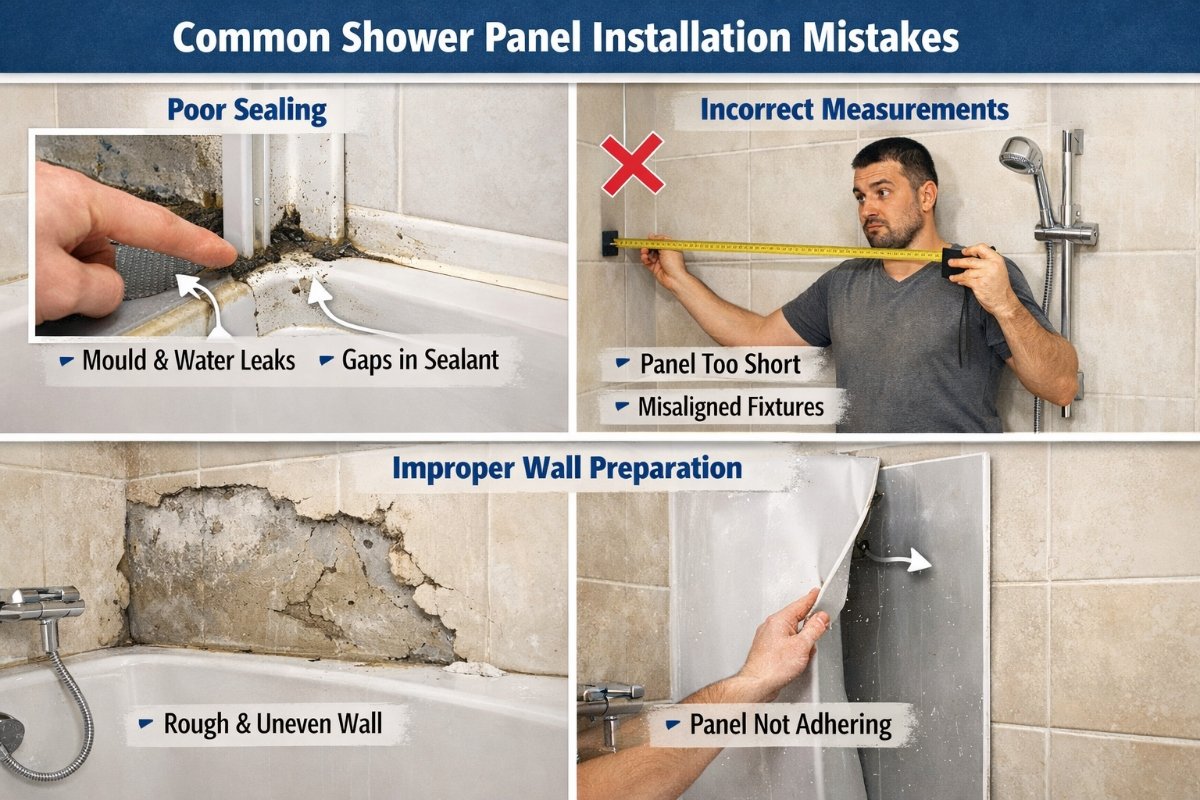
Shower panels have become a popular choice in UK bathrooms thanks to their clean finish, waterproof performance, and quicker installation compared to traditional tiles. However, while they are designed to simplify bathroom renovations, incorrect installation can lead to costly problems such as leaks, mould, and poor durability.
If you’re planning a DIY bathroom upgrade or simply want to avoid common pitfalls, understanding what not to do is just as important as knowing the correct process. This guide covers the most common mistakes when installing shower panels and how to avoid them for a long-lasting, professional result.
Why Proper Shower Panel Installation Matters
Correct installation is essential to ensure your shower panels perform as intended. These panels are designed to create a watertight barrier, protecting your walls from moisture damage. Poor installation can compromise this protection, leading to water ingress, structural damage, and expensive repairs.
- Waterproofing: Prevents leaks and damp issues
- Durability: Ensures panels stay secure for years
- Appearance: Achieves a smooth, seamless finish
- Cost efficiency: Avoids future repair costs
Most Common Mistakes to Avoid When Installing Shower Panels
1. Not Preparing the Wall Properly
One of the most common mistakes is installing panels on surfaces that are uneven, dirty, or damp. Shower panels require a flat and stable surface to adhere correctly.
- Why it happens: Rushing the preparation stage or assuming existing walls are suitable.
- Consequences: Panels may not bond properly, leading to gaps or movement over time.
- How to avoid it: Ensure walls are clean, dry, and level. Remove dust, grease, and loose materials before installation.
2. Installing Over Unsuitable Surfaces
While shower panels can sometimes be installed over tiles, not all surfaces are suitable.
- Why it happens: Misunderstanding compatibility of existing surfaces.
- Consequences: Weak adhesion and uneven finishes.
- How to avoid it: Only install over solid, well-bonded tiles. Avoid surfaces with cracks, loose tiles, or moisture damage.
3. Incorrect Measurements and Cutting
Accurate measurements are critical when fitting shower panels.
- Why it happens: Lack of planning or improper measuring tools.
- Consequences: Gaps, misalignment, and wasted materials.
- How to avoid it: Measure twice and cut once. Use precise tools and double-check dimensions before cutting.
4. Using the Wrong Adhesive
Not all adhesives are suitable for bathroom environments.
- Why it happens: Choosing general-purpose adhesives instead of waterproof options.
- Consequences: Panels may loosen or fail over time.
- How to avoid it: Use a high-quality adhesive specifically designed for shower panels and wet areas.
5. Poor Joint Sealing
Improper sealing is one of the leading causes of leaks in shower panel installations.
- Why it happens: Skipping sealing steps or using low-quality silicone.
- Consequences: Water penetration, mould growth, and damage behind panels.
- How to avoid it: Apply waterproof silicone sealant to all joints, edges, and corners.
6. Ignoring Expansion Gaps
Shower panels can expand and contract with temperature changes.
- Why it happens: Lack of awareness about material behaviour.
- Consequences: Warping, cracking, or buckling panels.
- How to avoid it: Leave small expansion gaps as recommended by the manufacturer.
7. Rushing the Installation Process
Trying to complete the installation too quickly can lead to mistakes.
- Why it happens: Underestimating the importance of drying and curing times.
- Consequences: Weak bonding and misaligned panels.
- How to avoid it: Follow recommended drying times and work methodically.
8. Not Using the Right Tools
Using incorrect tools can affect both the quality and safety of installation.
- Why it happens: Attempting to complete the job with limited equipment.
- Consequences: Poor cuts, damaged panels, and uneven finish.
- How to avoid it: Use proper tools such as a fine-tooth saw, spirit level, and measuring tape.
Pro Tips for a Smooth Shower Panel Installation
- Always plan your layout before starting
- Double-check measurements at every stage
- Use high-quality materials for better durability
- Work in a clean and controlled environment
- Follow manufacturer guidelines carefully
For a complete step-by-step walk through, refer to the How to Fit Shower Panels Guide By FloorsToWalls UK. It provides detailed instructions to help you achieve a professional finish.
Shower Panels vs Other Wall Panels
Acoustic Wall Panels (Brief Overview)
Acoustic wall panels are designed to improve sound insulation and reduce noise levels. Unlike shower panels, they are not waterproof and are typically used in living rooms, offices, or bedrooms. Their installation is generally simpler as they do not require waterproof sealing.
Kitchen Wall Panels (Brief Overview)
Kitchen wall panels are designed to withstand heat, splashes, and stains. They are easier to clean than tiles and provide a modern alternative for splashbacks. While installation is similar to shower panels, kitchen panels require heat-resistant materials and careful positioning around appliances.
When to DIY vs Hire a Professional
Installing shower panels can be a DIY-friendly project, but it depends on your skill level and the complexity of the space.
- DIY: Suitable for small, straightforward installations with flat surfaces
- Professional: Recommended for complex layouts, large bathrooms, or where waterproofing is critical
Hiring a professional can reduce the risk of costly mistakes, especially if you are unsure about any stage of the installation process.
Conclusion
Shower panels offer a practical and stylish solution for modern bathrooms, but their performance depends heavily on proper installation. Avoiding common mistakes such as poor preparation, incorrect sealing, and rushed work can make a significant difference in the final result.
By following best practices and taking the time to plan carefully, you can achieve a durable, waterproof, and visually appealing finish that lasts for years.
FAQs
Can you install shower panels over tiles?
Yes, as long as the tiles are secure, flat, and in good condition.
How long does it take to install shower panels?
Most installations can be completed within a few hours, depending on the size of the area.
Are shower panels completely waterproof?
Yes, when properly installed and sealed, they provide a fully waterproof surface.
What adhesive should be used for shower panels?
A high-quality, waterproof adhesive designed for bathroom use is recommended.
Do I need a professional to install shower panels?
Not always, but professional installation is advisable for complex projects.

