Why Cardiff Homeowners Are Choosing Shower Panel Walls Over Traditional Tiles
More homeowners in Cardiff are choosing shower panel walls instead of traditional tiles for their bathrooms. Explore the benefits of waterproof protection, easier maintenance, faster installation, and stylish modern finishes that make shower panels a popular choice across Cardiff.


Walk into any bathroom showroom in Cardiff right now and you will notice something has shifted. The conversation has moved on from the age-old debate about grout colours and tile formats.
More and more Cardiff homeowners are asking about shower panel walls, and once they understand what these panels offer, very few go back to tiles.
This guide covers everything you need to know about shower panel walls Cardiff residents are installing across the city, from terraced homes in Roath to new builds in Pontprennau.
What Are Shower Panel Walls?
Shower panel walls are large-format waterproof boards designed to line the interior surfaces of a shower enclosure or wet room. Unlike ceramic or porcelain tiles, which are fixed individually with adhesive and then grouted, shower panels are installed as full sheets that cover an entire wall in one or just a few pieces.
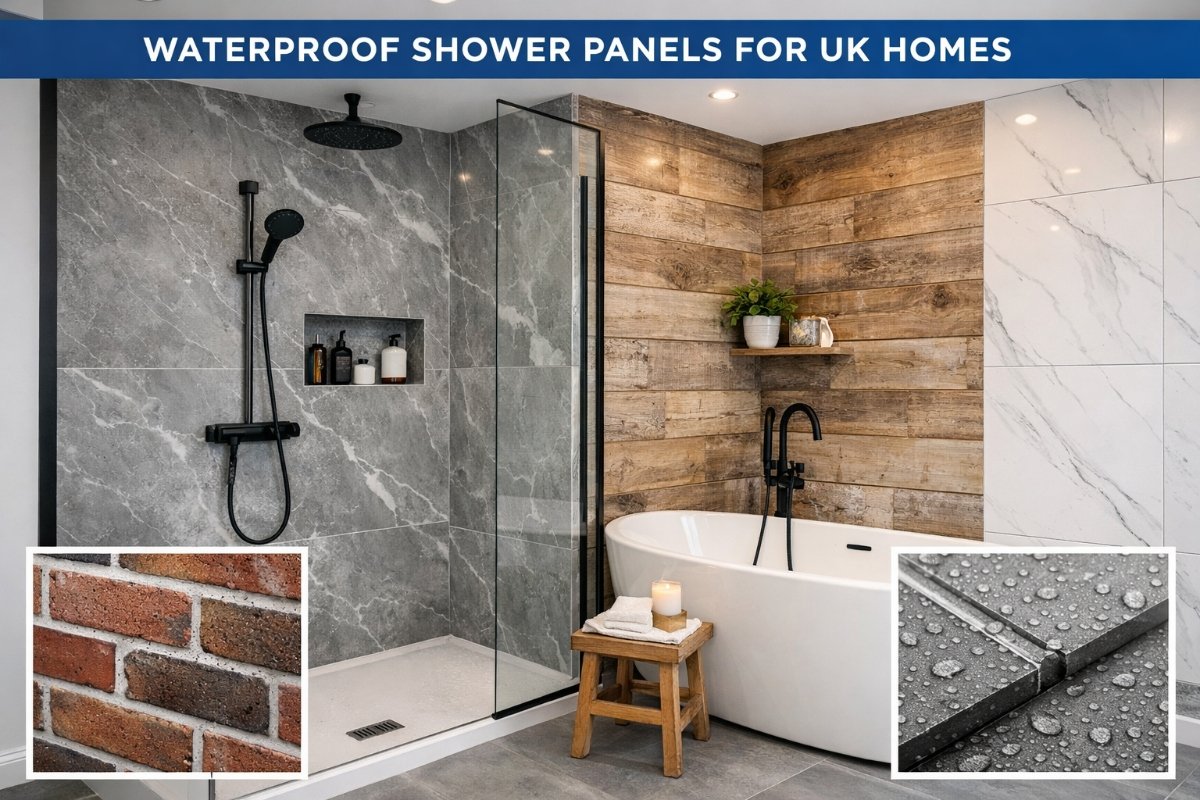
The panels themselves are typically made from one of several core materials: acrylic, PVC, solid composite, or a laminate with an aluminium or MDF backing. The surface finish varies widely, from high-gloss marble effects and stone looks through to soft mattes and woodgrain textures. The result is a seamless, grout-free surface that looks sleek and is genuinely easy to keep clean.
Panel thickness usually ranges between 3mm and 11mm depending on the material and manufacturer. Thinner acrylic panels are lightweight and straightforward to handle, while thicker composite or solid acrylic boards offer a more substantial, premium feel underfoot and to the touch.
The Problem with Traditional Tiles in Cardiff Bathrooms
Tiles have been the default choice for British bathrooms for generations, and there is nothing wrong with them in principle. The difficulty is that Cardiff’s housing stock creates some specific challenges that tiles handle poorly.
A large portion of Cardiff’s homes are Victorian and Edwardian terraces, particularly in areas like Canton, Pontcanna, Cathays, and Roath. These properties tend to have older solid walls with slightly uneven plaster, and they experience more movement over the years than modern timber-framed builds.
That movement causes grout lines to crack, and once the grout cracks, water gets in behind the tiles. What follows is familiar to many Cardiff homeowners: damp patches, black mould in the grout, tiles working loose, and eventually a full retile that costs more time and money than they bargained for.
Even in newer Cardiff properties, the maintenance burden of tiled showers frustrates many owners. Grout discolours, particularly in soft water areas, and no matter how good the original seal was, it will need reapplying regularly. For busy families or people who simply want a bathroom that looks good without constant upkeep, tiles are hard work.
Key Reasons Cardiff Homeowners Are Switching to Shower Panel Walls
No Grout Means No Mould
This is the single biggest selling point for most people. Grout is porous, and no matter how well you clean it, mould spores find their way in.
In a Cardiff bathroom where ventilation is not always perfect, particularly in older homes where windows are small or extractor fans were retrofitted as an afterthought, grout mould is a persistent problem.
Shower panel walls have no grout joints at all. The surface is smooth, non-porous, and gives mould nothing to grip onto.
Faster Installation
A professional tiler fitting a standard shower enclosure in a Cardiff home will typically need two to three days when you factor in preparation, adhesive cure time, grouting, and sealing. Shower panel walls can be fitted in a day, sometimes less.
There is no waiting for adhesive or grout to dry before the shower can be used. Most installers quote a 24-hour period before first use, purely as a precaution for the sealant to cure, rather than because the panels themselves need time to set.
That speed matters in a household where the family relies on one bathroom. A day without a shower is manageable. Three or four days is a real disruption.
Lower Long-Term Cost
The upfront cost of shower panel walls is often comparable to a mid-range tile installation once you account for all the materials. Where the saving becomes significant is over the lifetime of the installation.
There is no regrouting, no resealing, no individual tiles to replace when one cracks, and no mould treatments. A quality set of shower panels fitted correctly should last fifteen to twenty years without any meaningful maintenance beyond wiping them down.
Better Suited to Period Properties
As mentioned, Cardiff has a lot of older housing. The slight wall movement that causes tiles to crack is simply not a problem for shower panels.
Panels flex rather than fracture, and because they are bonded to the wall with a flexible adhesive rather than a rigid cement-based product, they accommodate minor structural movement far better.
Many Cardiff homeowners who have retiled the same shower two or three times report that switching to panels finally solved the problem for good.
A Genuinely Contemporary Look
Modern shower panel walls bear very little resemblance to the cheap plastic cladding that was common in British bathrooms in the 1980s and 1990s.
Today’s panels replicate the visual warmth of natural marble, the cool precision of slate, the softness of concrete, and the drama of deeply veined stone, all without the weight, fragility, or cost of the real materials.
For Cardiff homeowners looking to achieve a high-end bathroom aesthetic on a realistic budget, panels offer something tiles at the same price point simply cannot match.
Types of Shower Panel Walls Available
Acrylic Shower Panels
Acrylic panels are among the most popular choices across the UK for good reason. They are lightweight, come in a huge range of finishes, are simple to cut on site, and offer excellent waterproof performance.
The surface is non-porous and resists limescale better than most tiles. Acrylic panels are usually 4mm to 8mm thick and are fixed directly to the wall with a panel adhesive, with the joins sealed using a matching trim or silicone.
High-gloss acrylic panels are particularly effective in smaller Cardiff bathrooms because the reflective surface bounces light around the room and creates a sense of space. They also wipe down in seconds, which makes them ideal for busy family bathrooms.
PVC Shower Wall Panels
PVC cladding panels are the most budget-friendly option and work well in en suites, cloakrooms, and rental properties where durability and low cost are the priority.
They are thinner and lighter than acrylic, which makes them easy to transport and install, and they are genuinely waterproof throughout their entire thickness rather than just on the surface.
The main limitation of PVC panels is their aesthetic ceiling. Very thin PVC panels can look and feel a little hollow, and the range of convincing stone and marble effects is narrower than with acrylic or composite. That said, for a clean, functional, easy-care shower wall on a tight budget, PVC does the job reliably.
Laminate Shower Panels
Laminate panels, sometimes sold under the name high-pressure laminate or HPL, are composed of layers of paper impregnated with resin and fused under high heat and pressure. The result is an extremely hard, dense surface that is highly resistant to scratching and impact.
Laminate panels can achieve very convincing wood and stone effects because the decorative layer is a high-resolution image rather than a printed film.
These panels are heavier than acrylic or PVC, which means they need a sound, flat wall surface to fix to. They are an excellent choice for Cardiff homeowners who want a mid-range panel with a premium look and a surface robust enough to handle the demands of a family bathroom.
Solid Acrylic and Stone Composite Panels
At the top of the market, solid acrylic and stone composite panels offer the closest experience to genuine natural stone. These are thick, heavy boards, typically 10mm or more, with a colour that runs all the way through the material.
The edges can be routed into profiles, the surface can be sanded and buffed if it picks up light scratches, and the overall impression is one of serious quality. They are the panel equivalent of a luxury tile choice, without any of the grout maintenance.
Shower Panel Walls vs Tiles: A Direct Comparison
| Feature | Shower Panel Walls | Traditional Tiles |
|---|---|---|
| Installation time | Half a day to one full day | Two to four days including drying time |
| Grout maintenance | None required | Regular cleaning and periodic resealing |
| Mould risk | Very low | High, particularly in grout lines |
| Suitability for period homes | Excellent, tolerates wall movement | Poor, grout cracks with movement |
| Cleaning effort | Wipe down with a damp cloth | Grout requires scrubbing and treatment |
| Design options | Wide range of stone, marble, and solid colour effects | Enormous variety but limited by grout lines |
| Lifetime cost | Lower overall | Higher due to maintenance and replacement |
| Repair difficulty | Individual panels can be replaced | Matching original tiles can be difficult |
How Shower Panel Walls Are Fitted
Understanding the installation process helps Cardiff homeowners know what to expect from their fitter and how to prepare the bathroom beforehand.
The first step is preparing the wall. The surface needs to be clean, dry, and reasonably flat. Significant bumps or dips may need to be addressed with a self-levelling compound or by fitting the panels onto a layer of plywood or waterproof plasterboard. This is where older Cardiff homes sometimes need a little extra work, but it is straightforward to resolve.
Once the walls are ready, the panels are measured and cut to fit. Most standard shower enclosures are covered with three panels: one for each side wall and one for the back wall, with trims used to finish the joins.
The panels are bonded to the wall using a specialist panel adhesive, which is applied in vertical strips rather than over the entire panel back, allowing the adhesive to spread as the panel is pressed into place.
Joins between panels are sealed with a colour-matched silicone or covered with a slim aluminium trim, depending on the finish. The base of the panels is sealed to the shower tray or floor with silicone, and any internal corners are finished in the same way. The result is a fully watertight enclosure with no grout lines to maintain.
Choosing the Right Finish for Your Cardiff Home
The finish you choose should work with the overall character of your bathroom and your home. Here are a few directions that work particularly well for Cardiff properties.
Marble Effect Panels
White Carrara-style marble with soft grey veining is one of the most popular choices across Cardiff. It works in both period homes, where it references traditional luxury materials, and in modern new builds, where the clean lines complement contemporary fittings. Marble effect panels in a high-gloss acrylic finish give a bright, open feel even in compact bathrooms.
Concrete and Stone Effect Panels
For bathrooms with an industrial or minimalist aesthetic, a pale concrete effect or a textured stone look gives depth and warmth without the fussiness of heavily veined marble. These finishes work particularly well with matte black or brushed brass brassware, a combination that is very much in demand in Cardiff’s growing number of renovated Victorian terraces.
Solid Colours
A clean white, soft grey, or navy panel gives a timeless result and is easy to accessorise around. Solid colour panels are often used in en suites where the homeowner wants a very clean, uncluttered look. They also photograph well for property listings, which matters for Cardiff homeowners thinking about future resale value.
Caring for Your Shower Panel Walls
One of the greatest attractions of shower panel walls is how little care they need. That said, a minimal maintenance routine will keep them looking their best for years longer than if they are left entirely unattended.
After each shower, a quick wipe down with a squeegee removes the bulk of the water and prevents limescale from building up. This takes about thirty seconds and makes a significant difference, particularly in Cardiff where the water is relatively hard in some areas.
A weekly wipe with a non-abrasive bathroom spray cleaner removes any soap scum before it has a chance to build up.
Avoid abrasive pads or scouring powders on acrylic or laminate panels. These will scratch the surface finish over time, making it harder to clean and dulling the appearance. A soft microfibre cloth is all that is needed.
For stubborn limescale, a solution of diluted white vinegar applied with a cloth and left for a few minutes will dissolve the deposits without harming the panel surface.
The silicone seal at the joins and base of the panels should be checked once a year. If it shows any signs of discolouration, lifting, or cracking, it is worth replacing.
This is a quick and inexpensive job that any bathroom fitter or confident DIYer can handle, and it ensures the panels remain fully watertight.
Are Shower Panel Walls Suitable for Wet Rooms?
Yes, and they are increasingly being used in wet rooms across Cardiff. A wet room is simply an open shower space where the entire floor is waterproofed and slopes to a drain, with no separate shower tray. The walls of a wet room need to be fully waterproof from floor to ceiling, and shower panels are an excellent solution for this.
In a wet room installation, the panels are typically bonded directly to a waterproof substrate such as tile backer board, and the joints are sealed carefully to ensure no water penetrates behind the panel.
Some installers use a tanking membrane behind the panels for additional peace of mind. The result is a wet room wall surface that is easier to maintain than tiles and gives the clean, seamless look that most homeowners want from an open shower space.
Can Shower Panels Be Fitted Over Existing Tiles?
This is a question that comes up regularly in Cardiff, where the cost of full tile removal and replastering can add significantly to a bathroom renovation budget. In many cases, yes, shower panels can be fitted directly over existing tiles, provided a few conditions are met.
The existing tiles must be sound and firmly adhered to the wall. Any loose or hollow-sounding tiles should be replaced or removed before the panels go over the top.
The tile surface must also be reasonably flat; very deep grout lines or large individual tiles with significant variation in height can make it difficult to get a flat panel surface, though a skim of tile adhesive or levelling compound can often resolve this.
Fitting panels over tiles does add a small amount of depth to the wall, which can occasionally affect the fit of existing shower doors or enclosures. A good installer will check this before starting and advise if any adjustments are needed.
When it works, fitting over tiles saves the cost of stripping out and disposal and can cut a day or more off the installation time.
What Cardiff Homeowners Say After Making the Switch
The feedback from homeowners who have replaced tiled showers with shower panel walls tends to follow a consistent pattern. The installation is faster and less disruptive than expected. The finished result looks cleaner and more contemporary than the tiles it replaced.
The cleaning is dramatically easier, to the point where some homeowners describe it as almost effortless compared to what they were doing before. Several homeowners in Cardiff’s older housing stock specifically mention that panels solved a persistent damp problem that retiling never managed to fix.
The seamless, grout-free surface simply does not give water anywhere to penetrate, which addresses the root cause rather than patching over it.
Where to Buy Shower Panel Walls in the UK
Shower panel walls are available through bathroom showrooms, national home improvement retailers, and specialist online suppliers. Prices vary considerably depending on material, thickness, and finish, so it is worth comparing a few options before committing.
When buying panels online, pay attention to the quoted panel dimensions. Standard shower panels are typically 2400mm tall, which suits most British ceiling heights, but width varies between manufacturers. You will also want to check what trim and accessories are included or available separately, as a well-finished installation depends on matching trims, corner pieces, and end caps as much as the panels themselves.
At FloorsToWalls, the shower panel range covers everything from budget-friendly PVC cladding through to premium marble effect acrylic and stone composite options, with UK-stocked panels available for fast delivery across Wales and the rest of Britain.
Frequently Asked Questions About Shower Panel Walls Cardiff
How long do shower panel walls last?
A quality set of shower panels, fitted correctly with a proper wall preparation and sealed joins, should last fifteen to twenty years without significant maintenance. Some acrylic and composite panels carry manufacturer guarantees of ten years or more.
Are shower panels as waterproof as tiles?
In practice, shower panels are more reliably waterproof than tiles over the long term because there are no grout lines to degrade. A tiled shower relies on the integrity of the grout and the original tile adhesive, both of which deteriorate over time. A panel installation has far fewer joints to maintain, and modern silicone sealants remain flexible and watertight for many years.
Can I fit shower panels myself?
A competent DIYer can fit shower panels, and many Cardiff homeowners do exactly that. The process is more forgiving than tiling because there is no grouting and no need to keep individual pieces perfectly aligned. The key steps are getting the wall flat and clean before starting, cutting the panels accurately, and making sure every join is sealed properly. If you are confident with basic tools and have fitted flat-pack furniture or similar, shower panels are achievable. If the wall preparation is complex or the shower is an unusual shape, a professional fitter will save time and ensure a clean result.
Do shower panel walls add value to a Cardiff home?
A clean, modern bathroom is one of the factors buyers notice most in Cardiff’s competitive property market. Shower panel walls that look fresh and well-fitted will be viewed positively by most buyers. The key is the overall quality of the installation and the choice of finish. A marble effect acrylic panel in good condition reads as a contemporary, low-maintenance bathroom feature, which is appealing to most purchasers.
What thickness of shower panel should I choose?
For a family bathroom used daily, a panel of at least 8mm is recommended. Thinner panels can flex slightly when pressed, which feels less solid. For a wet room or a shower used by multiple people, a 10mm or 11mm composite panel offers the most robust and premium result. Thinner 3mm to 5mm panels are fine for occasional-use showers such as en suites in guest bedrooms.
Can shower panels be used on the floor?
Most shower wall panels are not suitable for flooring because they are not designed for the load-bearing stress of standing on them repeatedly. Wet room floors should use purpose-made waterproof flooring, a tiled floor over a tanking membrane, or a prefabricated wet room tray. Some manufacturers do offer companion floor panels, but these should be chosen carefully and confirmed as rated for floor use before installation.
How do I deal with the join between panels?
Joins between adjacent panels are finished in one of two ways. A slim aluminium H-trim covers the join from the front and gives a clean, defined line between panels. Alternatively, panels can be butted together with a thin bead of colour-matched silicone in the joint, which gives a more seamless look. Both methods work well when done carefully. The choice comes down to personal preference and the look of the overall bathroom.
Are shower panel walls suitable for a family bathroom?
Shower panels are arguably better suited to a family bathroom than tiles, precisely because of the reduced maintenance burden. A surface that wipes clean in seconds, with no grout to scrub and no mould to treat, is a real advantage in a bathroom that sees heavy daily use. The main consideration is choosing a finish robust enough to handle accidental impact. A solid acrylic or composite panel will resist knocks better than a thin PVC sheet.
Making the Right Choice for Your Cardiff Bathroom
The shift toward shower panel walls in Cardiff is not a passing trend. It reflects a genuine reassessment of what homeowners want from a bathroom: a space that looks great, works reliably, and does not demand constant maintenance. Tiles had their era, and they remain a perfectly valid choice for some homeowners. But for the majority of Cardiff residents dealing with older walls, limited time for cleaning, or a budget that needs to stretch across a full bathroom renovation, shower panel walls offer a compelling, practical alternative.
The range of finishes available today means there is no aesthetic compromise involved. Whether you want the drama of a dark marble, the calm of a pale concrete, or the timeless simplicity of a gloss white, there is a shower panel that delivers it without a single grout line in sight.
If you are considering a bathroom renovation in Cardiff, shower panel walls deserve a serious look before you commit to another set of tiles.
Related Posts:
- Are Shower Board Panels Waterproof and Long-Lasting? UK Guide
- Why Every Modern Home Needs a Bathroom With Shower Panel Walls
- Why Homeowners Are Choosing Floors to Walls Shower Panels
Published By NEWSAxis UK.